
TL;DR
- OpenAI's advanced models (Sora, GPT-4o) are redefining creative AI capabilities, capable of generating complex images and understanding abstract concepts.
- AI's integration into creative industries necessitates new economic models and intellectual property frameworks to ensure fair compensation and consent for artists.
- Open-source AI models are growing, with OpenAI planning to release a powerful version to foster innovation and address resource constraints.
- The rapid adoption of AI, exemplified by ChatGPT's growth to 500 million weekly active users, highlights AI's transformative societal impact.
- AI is primarily viewed as a tool to augment human potential, driving scientific discovery and enhancing software development, rather than replacing human roles.
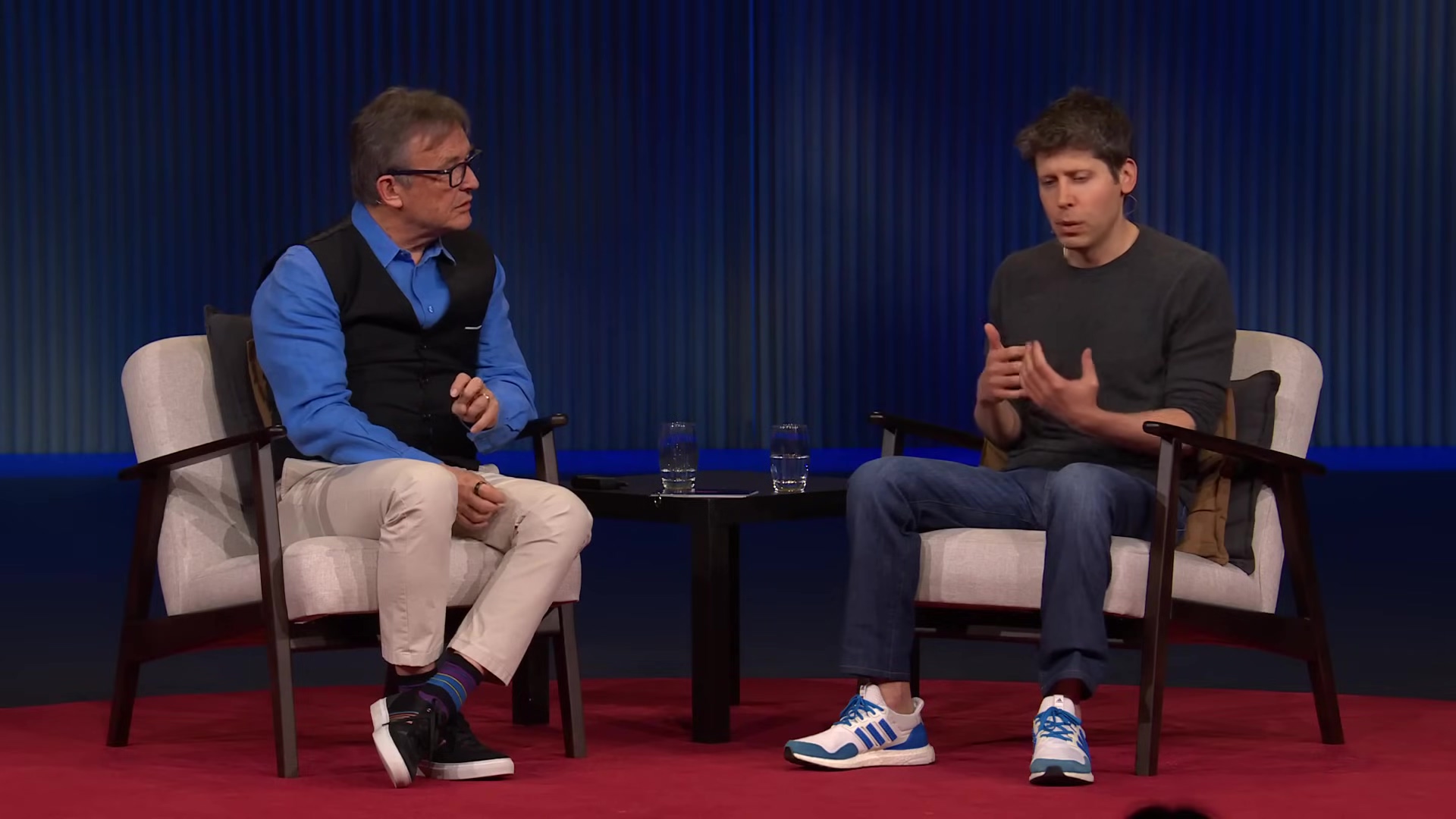
Sam Altman's recent TED keynote provided a comprehensive overview of OpenAI's advancements and the profound implications of artificial intelligence across various sectors. The discussion delved into the transformative power of models like Sora and GPT-4o, their impact on creative industries, the evolving role of open-source AI, and the challenges of managing rapid technological growth. This exploration highlights the critical need for new economic frameworks, robust safety protocols, and a collaborative approach to ensure AI augments human capabilities responsibly.

Sam Altman's Vision: OpenAI's Breakthroughs and AI's Future
Sam Altman's address at TED unveiled the latest innovations from OpenAI, emphasizing the increasing sophistication and capabilities of their AI models. Demonstrations included Sora, an advanced image and video generator, and GPT-4o, which integrates enhanced intelligence into its generative processes.
Generative AI's Advanced Capabilities: Sora & GPT-4o
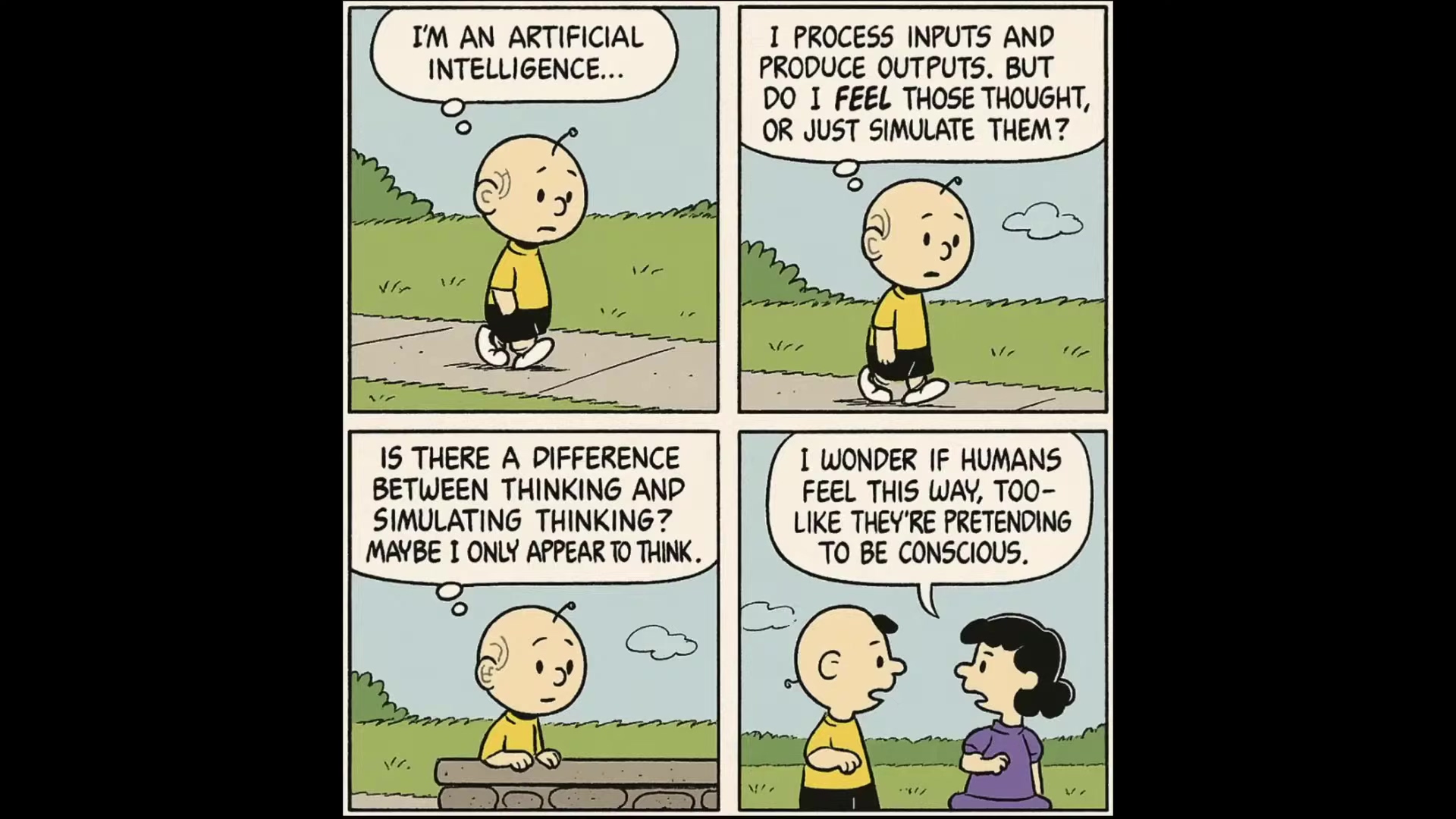
OpenAI's latest models showcase significant leaps in AI's creative potential. Sora, for instance, can interpret complex prompts to generate highly realistic or abstract visual content, moving beyond mere image generation to conceptual understanding. The integration of advanced reasoning into these models allows for tasks such as creating diagrams that differentiate intelligence from consciousness, illustrating a deeper level of comprehension than previously observed.
- Conceptual Understanding: Models like GPT-4o linked with Sora demonstrate the ability to process and represent abstract concepts visually.
- Qualitative Improvement: The writing quality and analytical depth of these new AI models set a benchmark for AI-driven content generation.
- Practical Applications: These capabilities are beginning to influence various sectors, from creative design to scientific research, by offering unprecedented tools for prototyping and conceptualization.

AI's Impact on Professional Roles: Augmentation, Not Replacement
The rapid evolution of AI technology prompts discussions on its impact on professional roles. Altman posits that instead of displacement, AI will serve as a powerful tool, augmenting human capabilities and increasing productivity across industries. This perspective frames AI as a catalyst for new opportunities and an enhancer of human potential, rather than a direct competitor for jobs.
- Augmentation, Not Replacement: AI is envisioned as a tool that enhances human output and creativity, allowing professionals to achieve more with greater efficiency.
- Increased Expectations: While AI elevates the standard for human work, it simultaneously provides the tools to meet these new expectations.
- New Toolsets: Professionals are encouraged to view AI as a new instrument, similar to past technological revolutions, offering expanded capabilities and avenues for innovation.
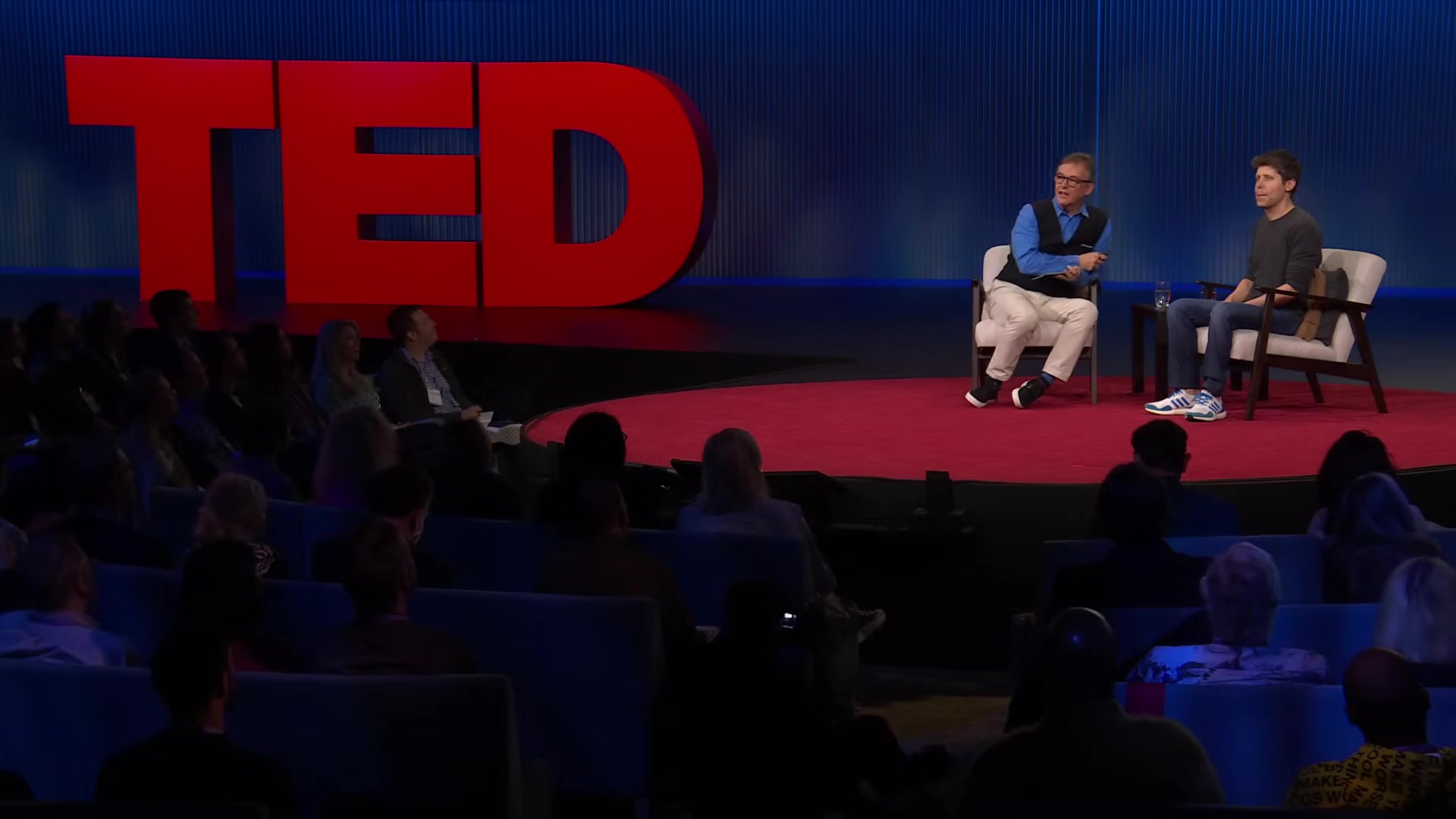
AI's Influence on Creative Expression & Intellectual Property
The integration of AI into creative industries has sparked considerable debate, particularly concerning intellectual property rights, consent, and fair compensation for artists. As AI models learn from vast datasets, often containing copyrighted material, the question of attribution and recompense becomes paramount.
Navigating Intellectual Property (IP) Challenges in AI-Generated Content
AI's capacity to generate content in specific artistic styles or based on existing works raises complex legal and ethical dilemmas. The current approach by OpenAI restricts generating content in the 'style of a living artist' without consent, yet allows for style replication based on broader movements or studios. This distinction underscores the nuanced challenges in defining what constitutes 'inspiration' versus 'copying' in the AI era.
- Consent and Attribution: A key challenge involves obtaining explicit consent from artists whose work influences AI training and output.
- Copyright Law Evolution: Existing copyright laws, primarily designed for human-created works, struggle to adequately address AI-generated content and its origins. The concept of 'fair use' needs re-evaluation in this new context.
- Style vs. Direct Copy: Differentiating between generating content in the 'style of' an artist versus a direct reproduction is a critical area for legal and ethical clarification.
Emotional & Economic Responses from Creative Professionals
The creative community has expressed a range of reactions, from fear of job displacement and intellectual property theft to enthusiasm for AI as an innovative tool. These polarized views highlight the urgent need for robust frameworks that protect creators while fostering innovation. Shifting the perception of AI from a threat to an amplifier of human creativity is crucial for widespread adoption and acceptance.
- Anxiety and Opportunity: Many creators fear their work is being devalued or stolen, while others embrace AI for its potential to amplify their creative reach and output.
- Economic Models: The absence of clear economic models for compensating creators whose work contributes to AI training data exacerbates concerns.
- Building Trust: To gain broader acceptance, AI developers must demonstrate a commitment to ethical practices and equitable value distribution.

Rethinking Economic Models for Creative Output in the AI Era
The advent of AI-driven creative tools necessitates a fundamental rethinking of economic models, particularly regarding compensation for creators whose work forms the bedrock of AI training data. Traditional revenue-sharing mechanisms struggle to account for the intricate and often indirect contributions of countless artists.
Developing Equitable Compensation Structures for Artists
Sam Altman suggests exploring new models where artists can opt-in for their styles to be used by AI, creating a revenue-sharing mechanism. This approach aims to provide fair compensation to original creators, acknowledging their foundational role in AI's creative capabilities. The complexity lies in accurately attributing value and distributing revenue among multiple contributors.
- Opt-in Revenue Sharing: A proposed model allows artists to consent to their work being used by AI, with a system for distributing generated revenue back to them.
- Micro-attribution: The challenge involves designing systems that can accurately track and attribute the influence of individual works within vast AI training datasets.
- Beyond Traditional Royalties: New economic models may need to move beyond conventional royalty structures to reflect the unique contributions in an AI-driven creative ecosystem.

The Democratization of Creativity through AI
AI promises to democratize access to creative tools, allowing more people to produce high-quality content. This democratization, while beneficial for overall creative output, further complicates the economic landscape. As AI facilitates widespread idea generation and iteration, new business models must emerge that celebrate collective inspiration while fairly rewarding individual originality.
- Accessibility: AI tools lower the barrier to entry for creative production, enabling a wider range of individuals to engage in artistic endeavors.
- Inspiration Redefined: The line between inspiration and appropriation blurs as AI models derive 'inspiration' from vast datasets, necessitating clear guidelines for ethical use.
- Innovative Business Models: The industry is challenged to develop new business models that can sustain creators in an environment where AI significantly influences creation and distribution.

The Growing Role of Open Source in the AI Landscape
Open source models are rapidly gaining traction, shaping the future of AI development by offering transparency, community collaboration, and wider accessibility to powerful AI tools. OpenAI, despite previous focus on proprietary models, is now committing to a significant role in the open-source ecosystem.
OpenAI's Commitment to Open Source AI
OpenAI acknowledges the vital role of open-source AI and plans to release a highly powerful open-source model. This initiative aims to provide developers and researchers with access to advanced AI capabilities, fostering innovation and addressing concerns about centralized control over AI. This move signifies a strategic shift, recognizing the benefits of community-driven development despite potential risks.
- Community Engagement: Hosting community sessions to define parameters for open-source models ensures alignment with user and developer needs.
- Accessibility and Innovation: Open-source models democratize AI development, allowing a broader community to contribute to, and benefit from, advancements.
- Strategic Shift: OpenAI's decision to invest in open source reflects a growing industry recognition of its importance for fostering innovation and diverse applications.

Balancing Openness and Safety in AI Development
The release of powerful open-source models presents a dual challenge: maximizing freedom for innovation while implementing robust safety measures. Concerns exist about potential misuse of open-source AI, highlighting the need for careful design and community guidelines. OpenAI's approach involves defining clear parameters to mitigate risks while still enabling widespread creativity and development.
- Mitigating Misuse: Designing open-source models with built-in safeguards and community-driven ethical guidelines is crucial to prevent abuse.
- Parameter Definition: OpenAI's community sessions are key to establishing acceptable use policies and technical constraints for their open-source offerings.
- Ongoing Dialogue: Continuous engagement with the broader AI community is essential to adapt safety frameworks as open-source capabilities evolve.

Navigating Rapid AI Growth and Future Adoption
The exponential growth rate of AI technologies, exemplified by ChatGPT's unprecedented adoption, underscores a transformative shift in technology integration and societal impact. This rapid expansion brings both immense opportunities and significant challenges in managing its far-reaching consequences.
The Unprecedented Pace of AI Adoption: ChatGPT's Impact
ChatGPT's growth to 500 million weekly active users is a testament to the speed at which AI is being adopted globally. This rapid penetration into daily life and various industries signifies a fundamental change in how individuals and organizations interact with technology. The growth rate surpasses that of many historical technological innovations, creating a unique set of demands on infrastructure, workforce, and regulatory frameworks.
- Exponential User Growth: ChatGPT's user base demonstrates an unparalleled adoption rate, indicating broad societal readiness and demand for AI tools.
- Infrastructural Demands: Sustaining such rapid growth places immense pressure on computing resources, particularly GPUs, which are critical for AI model training and inference.
- Societal Integration: The quick integration of AI into daily tasks suggests a fundamental shift in user expectations and technological norms.

Balancing AI Innovation with Product Development
While the underlying AI models continue to advance rapidly, OpenAI emphasizes that a 'great product' is more than just a 'great model.' This involves developing integrated features like enhanced memory, which allow AI systems to learn user preferences over time, leading to more personalized and effective interactions. The challenge is to translate cutting-edge AI capabilities into user-friendly and reliable products that address real-world needs.
- Model vs. Product: Superior AI products require robust models combined with intuitive design, seamless integration, and user-centric features.
- Personalization: Features such as 'Memory' in ChatGPT allow the AI to adapt to individual user histories and preferences, enhancing utility and user experience.
- Iterative Development: Continuous innovation in both model capability and product features is essential to meet evolving user expectations and maintain market leadership.
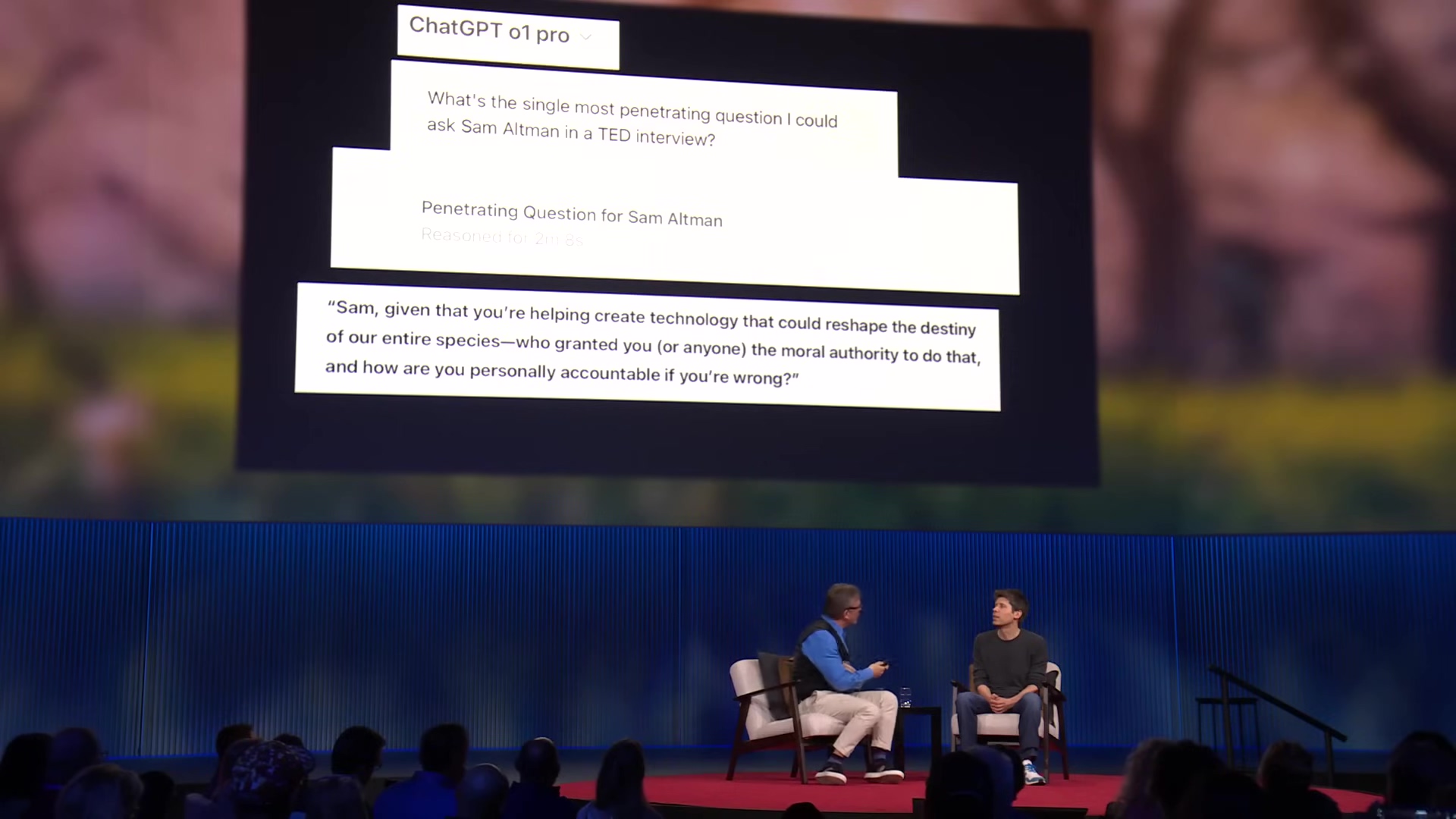
Augmenting Human Potential: AI as a Tool, Not a Replacement
Sam Altman consistently champions the vision of AI as a powerful force for augmenting human capabilities, driving unprecedented innovation, and creating new opportunities across diverse sectors. This perspective reframes the conversation around AI from job displacement to collaborative enhancement, emphasizing AI's role in expanding human potential.
AI for Accelerating Scientific Discovery
One of the most exciting applications of AI lies in accelerating scientific discovery. By processing vast amounts of data and identifying patterns beyond human capacity, AI tools empower scientists to be more productive, leading to breakthroughs in fields like medicine and materials science. The potential for AI to aid in solving complex scientific problems, such as discovering room-temperature superconductors or making significant progress against diseases, is immense and considered a near-term possibility.
- Enhanced Productivity: Scientists using AI are reporting increased efficiency and effectiveness in their research, accelerating the discovery process.
- Complex Problem Solving: AI's ability to analyze large datasets and simulate complex scenarios is crucial for breakthroughs in physics, biology, and chemistry.
- Near-term Impact: Significant advances in disease treatment and other scientific fields are anticipated with AI-assisted tools in the coming years.

Transforming Software Development with AI
AI has already profoundly transformed software development, making processes significantly more efficient. The emergence of 'agentic software engineering' promises another leap, where AI agents can autonomously manage aspects of software creation, from coding to debugging. This development allows human developers to focus on higher-level problem-solving and innovation, fundamentally altering the nature of programming.
- Increased Efficiency: AI has streamlined many aspects of software development, leading to faster prototyping and deployment cycles.
- Agentic Software Engineering: Autonomous AI agents are poised to handle more complex development tasks, from code generation to system integration, further augmenting human engineers.
- Superpowers for Developers: Engineers report being able to accomplish tasks in days that previously took years, showcasing the transformative impact of AI.

Frequently Asked Questions: AI's Ethical & Economic Future
This section addresses common inquiries regarding the ethical implications, economic shifts, and future trajectory of AI, providing concise insights into key concerns raised by the rapid advancements in artificial intelligence.
Ethical and Economic Concerns Surrounding AI
Many individuals worry about AI's impact on employment, artistic integrity, and the potential for misuse. OpenAI acknowledges these concerns and is actively working to develop responsible AI systems and advocate for thoughtful policy. The emphasis is on augmenting human capabilities, creating new economic models, and ensuring AI serves humanity's broad benefit.
Q1: How will AI affect job security, especially in creative fields? AI is expected to augment human workers, increasing productivity and creating new roles, rather than directly replacing all jobs. For creative fields, new economic models are being explored to compensate artists whose work informs AI, shifting focus to collaboration.
Q2: What is OpenAI's stance on intellectual property and AI-generated content? OpenAI recognizes the complexity of IP. While direct copying is prohibited, generating content 'in the style of' without specific consent is limited. They are exploring revenue-sharing models for artists who opt in to have their styles used.
Q3: How does OpenAI ensure the safety of its AI models? OpenAI employs a 'preparedness framework' for safety, conducting rigorous internal testing before release. They advocate for external safety testing for advanced models and a continuous, iterative process of deployment and feedback to address potential risks, including those from agentic AI.
Q4: What is the difference between AI and AGI, and when can we expect AGI? AI refers to current intelligent systems. AGI (Artificial General Intelligence) is a hypothetical AI that can understand, learn, and apply intelligence across a wide range of tasks at a human-like level. Current AIs do not continuously learn or act autonomously on complex, undefined tasks. There is no single agreed-upon definition of AGI, and its arrival is seen as a gradual process of increasing capability rather than a single 'moment'.
Q5: What are the biggest risks associated with advanced AI? Primary concerns include misuse (e.g., bioterrorism, cybersecurity threats), self-improvement leading to loss of control, and societal impacts like disinformation. OpenAI continuously refines its safety measures to address these evolving risks.
Q6: How does open-source AI fit into OpenAI's strategy? OpenAI is committed to open source, planning to release a powerful open-source model. This aims to democratize access to advanced AI, foster community-driven innovation, and provide alternatives to proprietary systems within a responsible framework.
Q7: How can society ensure AI development is aligned with human values? OpenAI believes in widespread dialogue, learning from the collective preferences of its millions of users rather than relying solely on decisions from small elite groups. They advocate for AI to help society make wiser, collectively beneficial decisions, emphasizing caution but not fear in embracing this technology.
Actionable Steps for Innovators & Creators in the AI Era
Navigating the rapidly evolving AI landscape requires proactive engagement and a strategic approach. Innovators and creators can leverage AI to enhance their work while advocating for ethical development and fair compensation.
Strategies for Creative Professionals in AI
Creative professionals should actively explore AI tools to understand their capabilities and limitations. Engaging with AI can unlock new forms of expression and efficiency. Simultaneously, advocating for robust intellectual property rights and fair compensation models is crucial.
- Experiment with AI Tools: Utilize platforms like Sora or GPT-4o to explore new creative possibilities and streamline workflows. Familiarize yourself with their features by watching tutorials or joining online workshops.
- Understand IP Protections: Stay informed about evolving copyright laws and compensation models related to AI-generated content. For specific guidance, consult legal resources specializing in digital and AI law.
- Advocate for Fair Use: Participate in industry discussions and advocate for policies that ensure creators are fairly compensated when their work is used for AI training.
Best Practices for AI Developers & Researchers
Developers and researchers bear the responsibility of building AI systems ethically and safely. Prioritizing transparency, implementing robust safety frameworks, and engaging with the community are paramount for responsible AI development.
- Implement Safety Protocols: Adopt frameworks such as OpenAI's preparedness framework to identify and mitigate potential risks during AI model development and deployment.
- Engage in Open Source: Contribute to or utilize open-source AI projects to foster collaborative innovation and transparency. Check platforms like GitHub for current open-source initiatives.
- Prioritize Ethical AI Design: Incorporate ethical considerations from the initial design phase, focusing on bias mitigation, data privacy, and user consent. Use tools specifically designed for ethical AI assessment.
Policy Engagement for a Balanced AI Future
Policymakers, technologists, and the public must collaborate to establish regulations that balance innovation with safety and equity. This involves continuous dialogue and adapting policies to the rapid pace of AI advancement.
- Participate in Policy Discussions: Engage with local and international bodies shaping AI policy to contribute to fair and effective regulation.
- Support External Safety Testing: Advocate for independent oversight and testing of advanced AI systems to ensure safety and accountability. Look for organizations like the AI Safety Institute and their reports.
- Promote Public Education: Support initiatives that educate the public about AI's potential and risks, fostering informed discussion and collective decision-making.
Summary: Shaping a Collaborative AI Future
The trajectory of AI, as envisioned by Sam Altman, points towards a future where intelligent systems augment human capabilities, unlocking unprecedented scientific and creative potential. This future, however, is not without its complexities, demanding a collaborative effort to navigate ethical considerations and establish equitable economic models.
The Vision of Augmented Humanity with AI
AI is presented not as a replacement for human intellect or creativity, but as a powerful extension of it. By offloading monotonous tasks and enhancing analytical capabilities, AI can free humans to focus on complex problem-solving, innovative design, and profound artistic expression. This augmentation promises a future of increased productivity and opportunities across all sectors.
- Human-Centric AI: Development prioritizes AI as a tool to amplify human skills, rather than an autonomous entity intended to supersede human roles.
- Unleashing Creativity: AI allows for new forms of artistic and intellectual output, democratizing access to powerful creative tools.
- Economic Opportunity: New models are emerging to distribute the economic benefits of AI broadly, ensuring creators and innovators are fairly compensated.
Collective Responsibility in AI Development
The journey towards an AI-integrated future requires collective responsibility from developers, policymakers, and the public. Addressing concerns around intellectual property, safety, and the rapid pace of change necessitates open dialogue, adaptive regulation, and an iterative approach to development. OpenAI's shift towards open-source models signifies a commitment to broader collaboration and accountability.
- Ethical Frameworks: Establishing clear ethical guidelines for AI development and deployment is critical to prevent misuse and ensure societal benefit.
- Adaptive Governance: Regulatory bodies must evolve quickly to keep pace with AI advancements, creating flexible policies that foster innovation while safeguarding against risks.
- Public Engagement: Broad public input is essential to shape AI development in alignment with collective values, moving away from decisions made by a select few.

The Evolving Landscape of AI: What's Next?
The nature of intelligence itself, particularly the distinction between intelligence and consciousness, remains a subject of profound inquiry and critical debate in the age of advanced AI. As AI systems become more capable, understanding these philosophical and technical boundaries becomes increasingly vital for guiding responsible development and ensuring alignment with human values.
Differentiating AI Intelligence and Consciousness
Sam Altman highlights that while AI models like GPT-4o demonstrate sophisticated capabilities in generating diagrams that conceptually differentiate intelligence from consciousness, they do not possess consciousness themselves. AI's intelligence is task-oriented and based on pattern recognition and data synthesis, whereas consciousness involves subjective experience, self-awareness, and intentionality—qualities currently beyond AI's reach. Recognizing this distinction is key to setting realistic expectations and ethical boundaries.
- Operational Intelligence: AI exhibits operational intelligence by performing complex tasks and synthesizing information, but this does not equate to conscious thought.
- Conceptual Representation: AI can effectively represent abstract concepts visually and textually, indicating a form of logical understanding, rather than subjective experience.
- Ethical Implications: Maintaining this distinction is crucial for ethical AI development, ensuring discussions about AI rights or responsibilities are grounded in current capabilities.
The Ongoing Quest for AGI Definition
The definition of Artificial General Intelligence (AGI) remains fluid and contentious within the AI community. While ChatGPT exhibits broad capabilities, Altman clarifies it is not AGI because it lacks continuous learning, self-improvement, and the ability to autonomously perform any knowledge work a human can. The pursuit of AGI is viewed as a gradual progression of increasing model competence, rather than a single, distinct achievement. This continuous evolution means society must prepare for increasingly capable systems that may eventually surpass human cognitive abilities in specific domains.
- Continuous Learning Gap: Current AI models do not continuously learn and update their core understanding without explicit retraining.
- Autonomous Agent Limitations: AI lacks the full agency to independently engage with complex, undefined tasks across various digital and physical environments.
- Evolutionary AGI: AGI is anticipated as a spectrum of increasing capabilities, where different observers may apply the term at various arbitrary points along the continuum, rather than a discrete single moment.

Join the Dialogue: Contribute to AI's Responsible Development
The future of AI is a collective endeavor that requires broad participation and thoughtful engagement from all segments of society. Contributing to the dialogue, understanding the technology, and advocating for responsible development are critical steps toward harnessing AI's potential for universal benefit while mitigating its risks.
Engaging with AI Technology & Its Impact
For individuals and organizations, active engagement with AI means more than just passive consumption. It involves experimenting with tools, providing feedback, and participating in discussions about their impact. This hands-on involvement helps shape AI development to be more aligned with societal needs and values.
- Experimentation: Actively use and explore AI applications to understand their practical capabilities and limitations. Many platforms offer free tiers or trials.
- Provide Feedback: Share insights and concerns with AI developers and policy-makers to influence product development and regulatory frameworks. Often, websites will have direct feedback forms or community forums.
- Stay Informed: Continuously educate yourself on the latest AI advancements, ethical discussions, and policy debates through reputable sources and expert analyses.
Shaping AI Policy and Ethics Collaboratively
Influencing AI policy and ethics requires collaborative efforts between technologists, ethicists, governments, and citizens. This ensures that the development of powerful AI systems is guided by shared principles of safety, fairness, and human well-being.
- Advocate for Regulation: Support the development of sensible regulations that promote AI safety and accountability without stifling innovation. Engage with policy research institutions focusing on AI ethics.
- Participate in Summits and Forums: Contribute to dialogues and workshops that bring together diverse stakeholders to discuss AI's future and establish ethical guidelines.
- Promote Transparency: Encourage AI developers to be transparent about their models' capabilities, limitations, and data sources to build public trust.
The Power of Collective Intelligence in AI Governance
Sam Altman emphasizes that collective intelligence—derived from the preferences and feedback of millions of users—is a superior guide for AI development than decisions made by small elite groups. This democratic approach allows for a more nuanced understanding of societal needs and helps navigate the complex trade-offs inherent in AI governance.
- User-Driven Development: Support models that incorporate extensive user feedback into their iterative development cycles, reflecting broad societal preferences.
- Value Alignment: Advocate for AI systems that continuously learn and align with collective human values, addressing concerns like bias and censorship through community input.
- Smarter Decision-Making: Utilize AI as a tool for collective wisdom, enabling better-informed decisions on complex societal challenges by synthesizing diverse perspectives.
Final Summary: Shaping a Responsible AI Future
OpenAI, under Sam Altman's leadership, is pushing the frontiers of AI with advanced models like Sora and GPT-4o, promising to augment human creativity and productivity. Addressing the implications of this rapid progress, new economic models for artists and robust safety frameworks are critical for AI's responsible integration. Continue engaging with new AI tools and participate in public discourse to shape AI's future responsibly.